VIOLENT MACHINES
I examine the impact of technologies of violence on consumer culture, and vice versa
How can the interplay between consumer technologies and military innovation offer new perspectives on technoconsumerism? What might technologies of anarcho-socialist resistance against the military-industrial-entertainment-complex look like? I have engaged with technologies of violence through field research in conflict zones, such as Eastern Ukraine, Syria and Palestine. I made installations and films in response to the Gulf War (1990-91) - aka The First Space War - and the EU border fence, and developed an artwork that is a functioning civilian missile defense system for the Rojava Revolution in Syria.
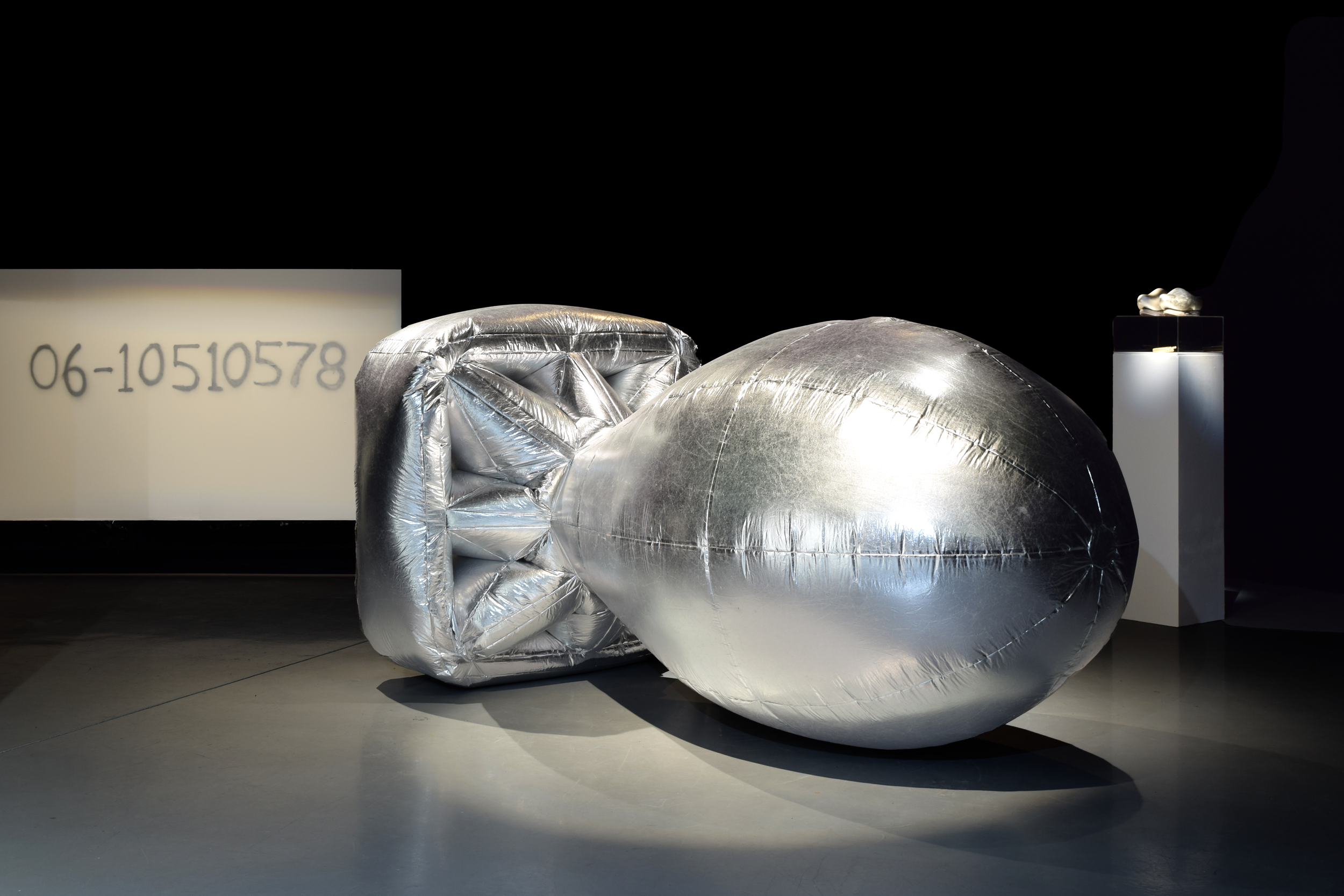
Improvised Inflatable Device (Fat Man), 2022-23. Construction in collaboration with Tools for Action. V2_Lab for the Unstable Media, Rotterdam
In 2015 and 2017, accompanied Ukrainian soldiers on the frontline in the Russo-Ukrainian war to document the role of everyday consumer gadgets, such as GoPros and mobile phones, in contemporary warfare. My solo show fronterlebnis at arebyte Gallery in London included several works made in response to these journeys (see this review on furtherfield), including the VR-installation frontline (2017), which I later reworked as Line of Contact (2022) for the BFI London Film Festival (see these reports in Newsweek and on Al Jazeera).
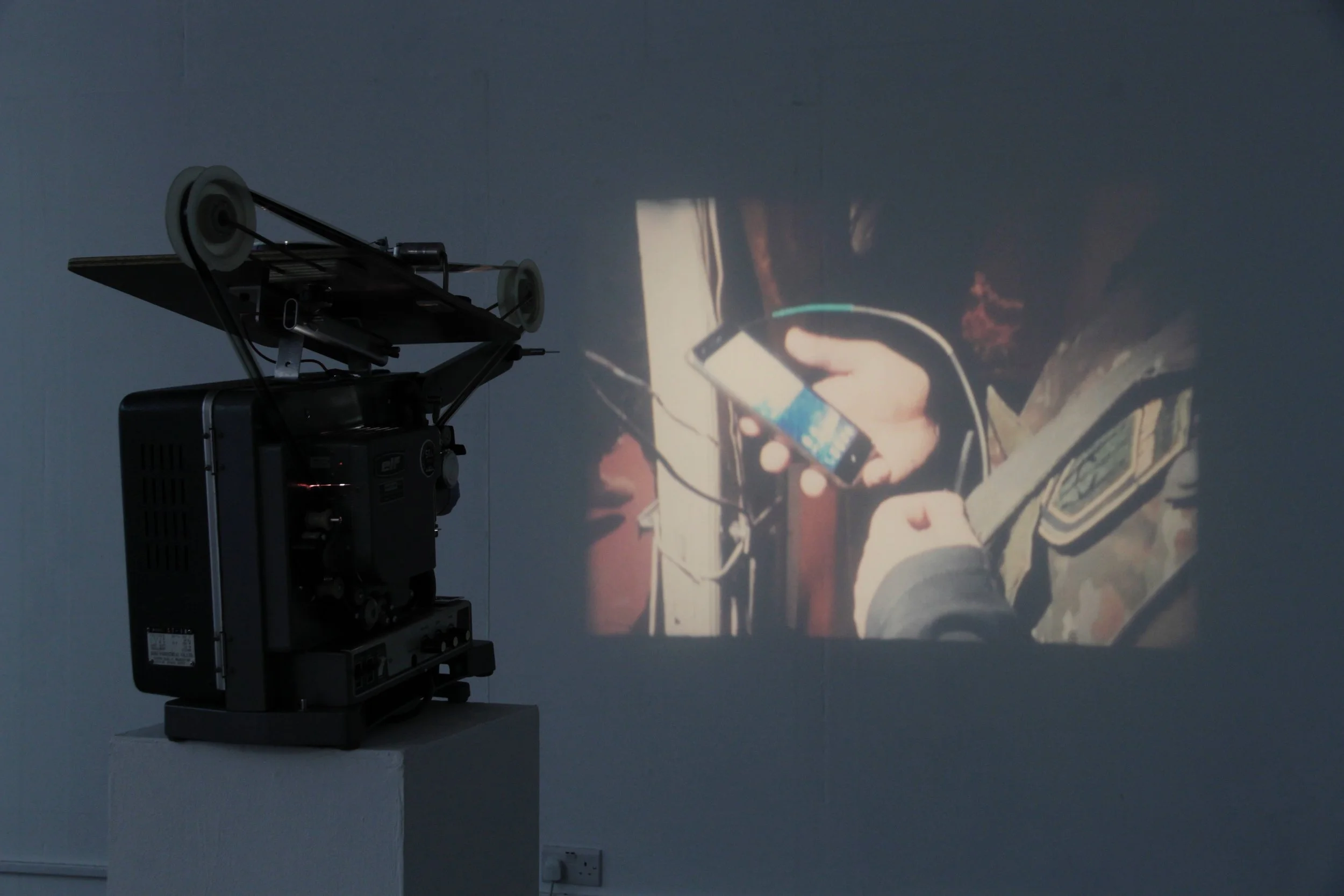
Patrol, 2017. Mobile phone video film shot on the frontline in Eastern Ukraine, transferred to 16mm. Video still. Arebyte Gallery, London
In 2018 and 2019, I engaged with the so-called smartfence that has been errected on the outer border of the EU in Hungary to obstruct migration. The new society for contemporary art Berlin (nGbK) commissioned the installation OUR VALUES, based on the corporate values of the Spanish company that produces the razor wire used on most EU borders. It was installed next to the border fence in Hungary, in Kunstraum Kreuzberg/Bethanien in Berlin (review in Taz newspaper) and the Ludwig Forum for International Art in Aachen (interview on Ludwig Forum website).
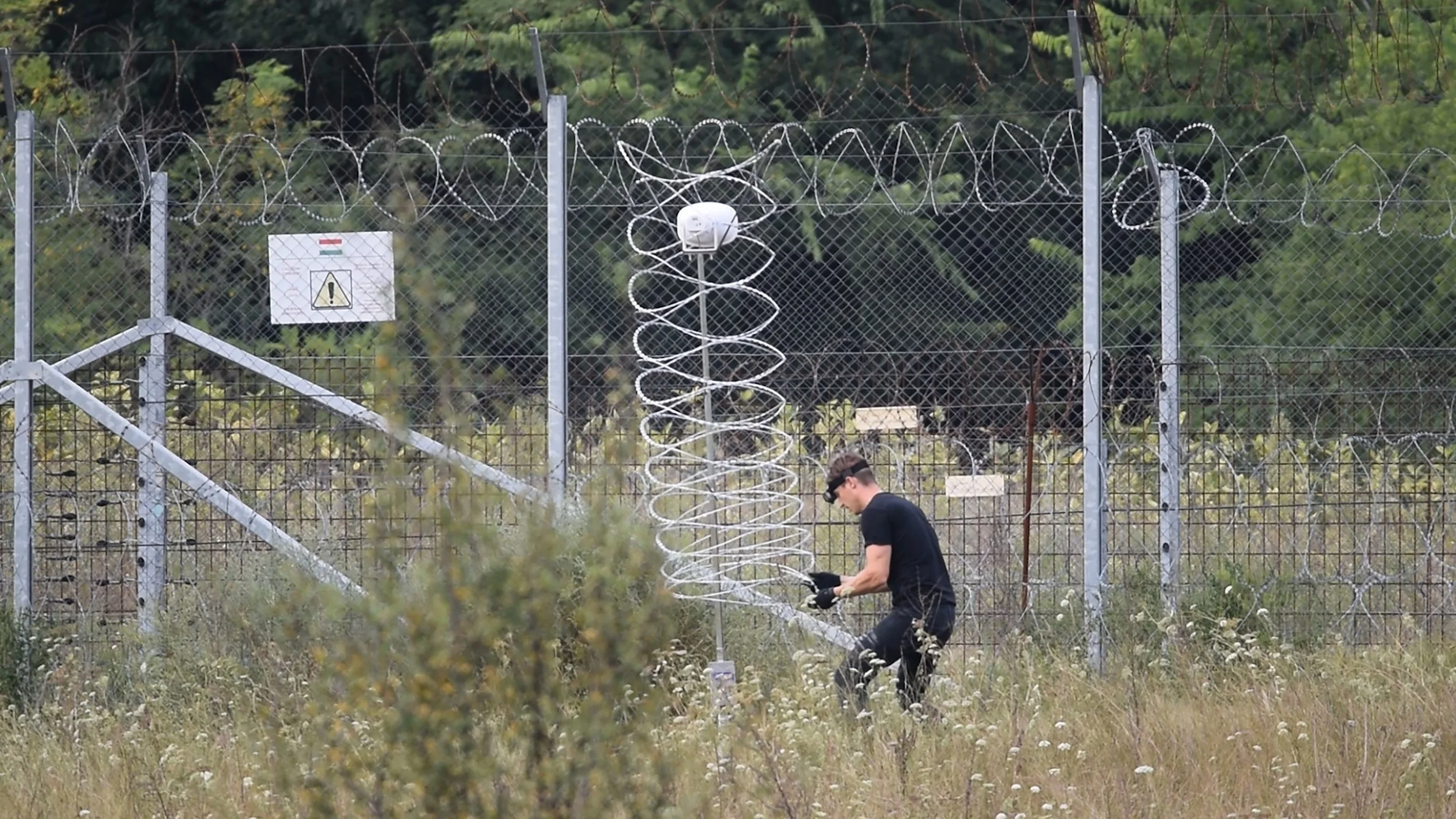
OUR VALUES, 2019. Installing object with razor wire and loudspeaker at EU border fence between Hungary and Serbia. Ludwig Forum for International Art, Aachen / Kunstraum Kreuzberg, Berlin
Since 2020, I have led the artistic research project Destructive Circuits, as part of my ongoing fellowship at V2_Lab for the Unstable Media in Rotterdam. The project examines the design and construction of Improvised Explosive Devices (IEDs) with reappropriated and hacked everyday digital technologies. In addition to the exhibition and publication, the project included an artwork edition of 800 envelopes with a mechanism that triggered an explosive sound when opened, designed after one of the Unabomber's bomb packages. It was distributed as a special addition to Neural magazine, accompanied by an interview about my work.
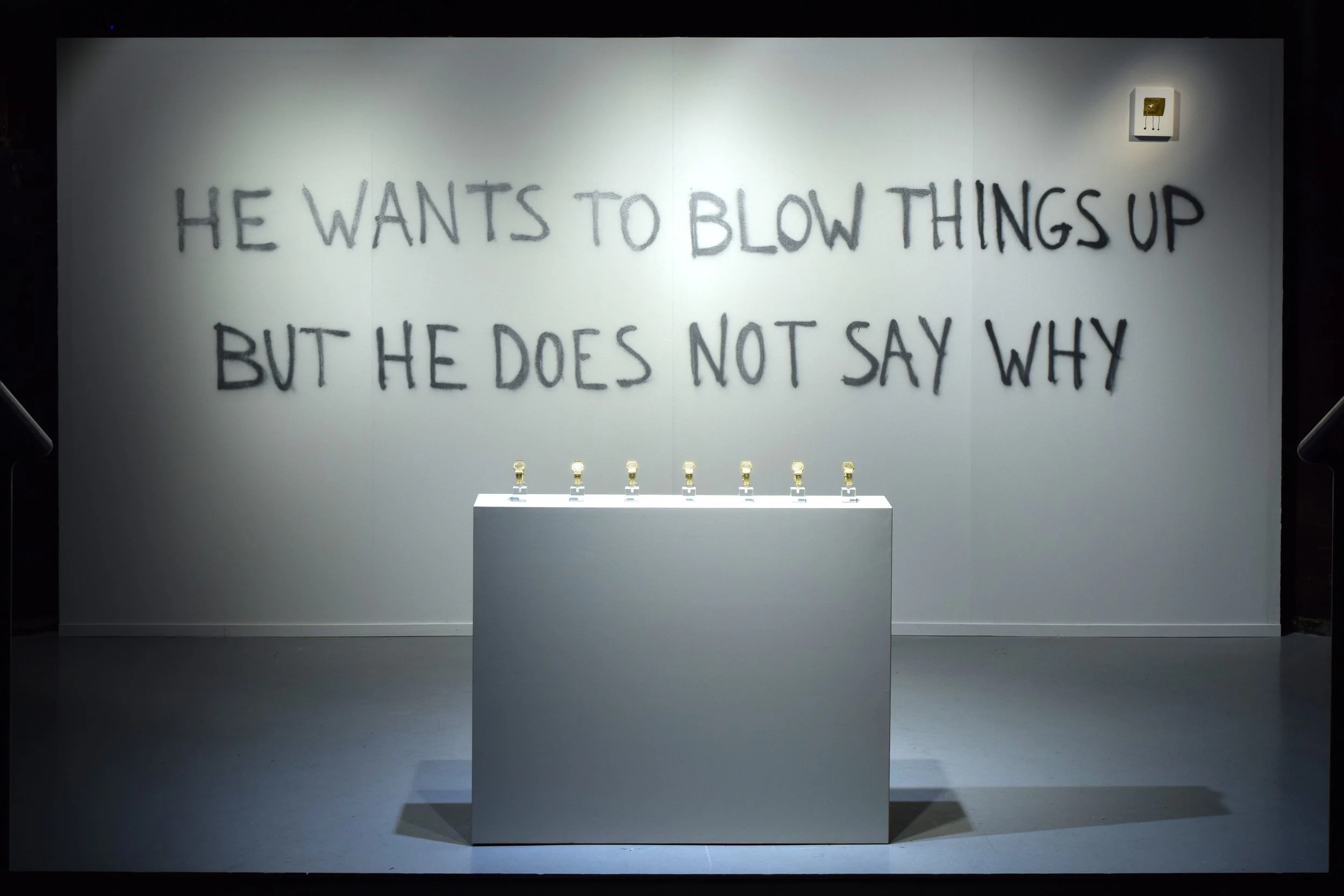
He Does Not Say Why, 2024. Graffiti, gold plated Casio watches, egg tempera and gold leaf on icon board. V2_Lab for the Unstable Media
My work A Space War Monument, was commissioned by the National Pavilion of Kuwait at the 2021 Venice Architecture Biennale on the occassion of the 30th anniversary of the end of the Gulf War (1990-91). It consists of a video simulation - a simulacrum in the sense of Baudrillard's writing about the war - in which a monument is erected in the Arabian desert with a GPS-bulldozer, and a sculpture of a GPS antenna floating in a magnetic field. We Make Money Not Art published this article about the project.
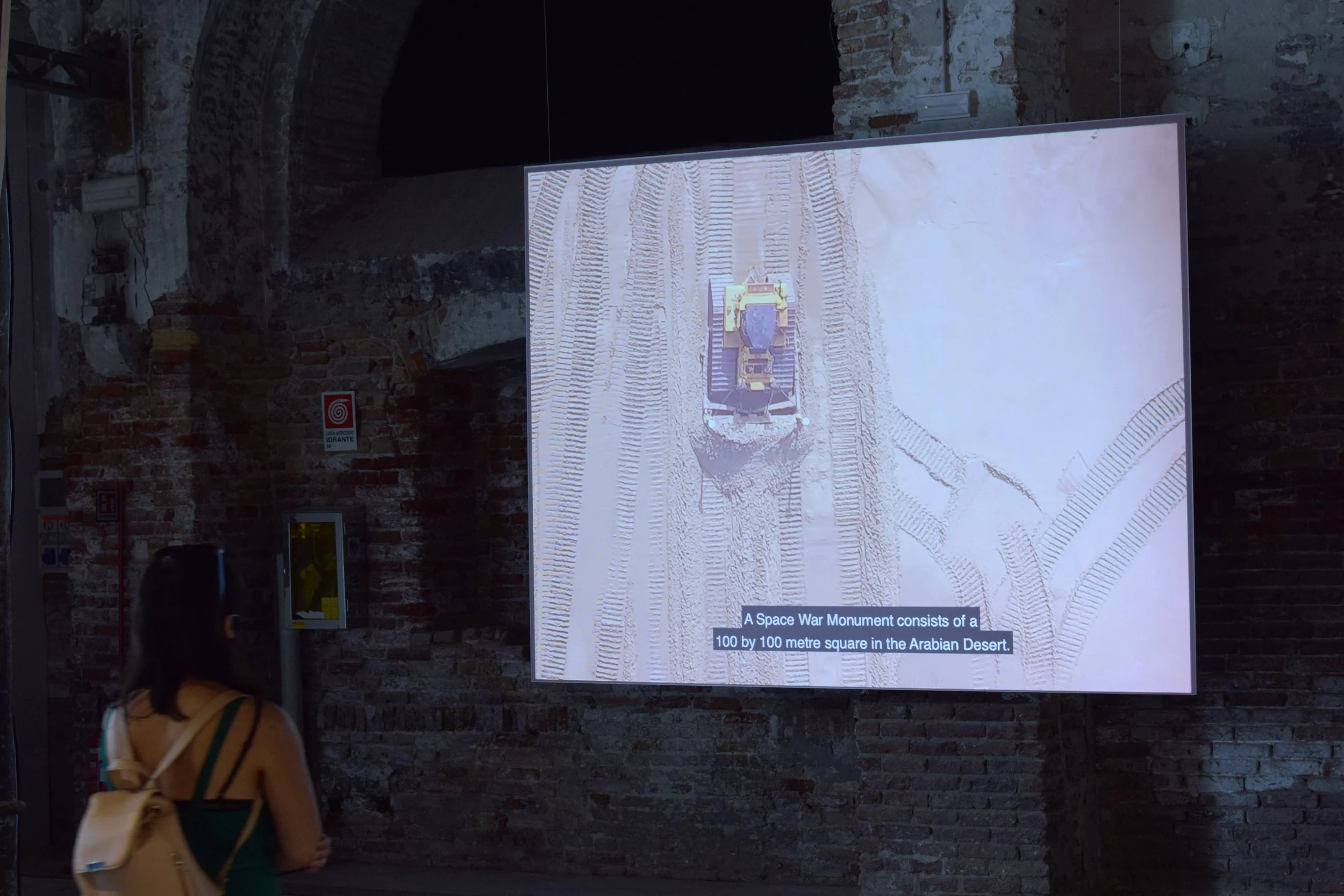
A Space War Monument (2021). Video of land art performance. Venice Architecture Biennale 2021, Kuwait Pavilion, Arsenale
My VR installation Hysteresis (2022), realized with an Experiment Grant from the Dutch Creative Industries Fund, navigates a violent excesses of technoculture outside conflict zones, namely in the practice of drag racing and car modding. Together with a local group of car modders in the Dutch countryside where I live, we converted a fun fair bumper car in which a VR experience recreates a car crash of one of the guys. Prof. Dr. Jens Schröter at Bonn University wrote a book chapter about it.
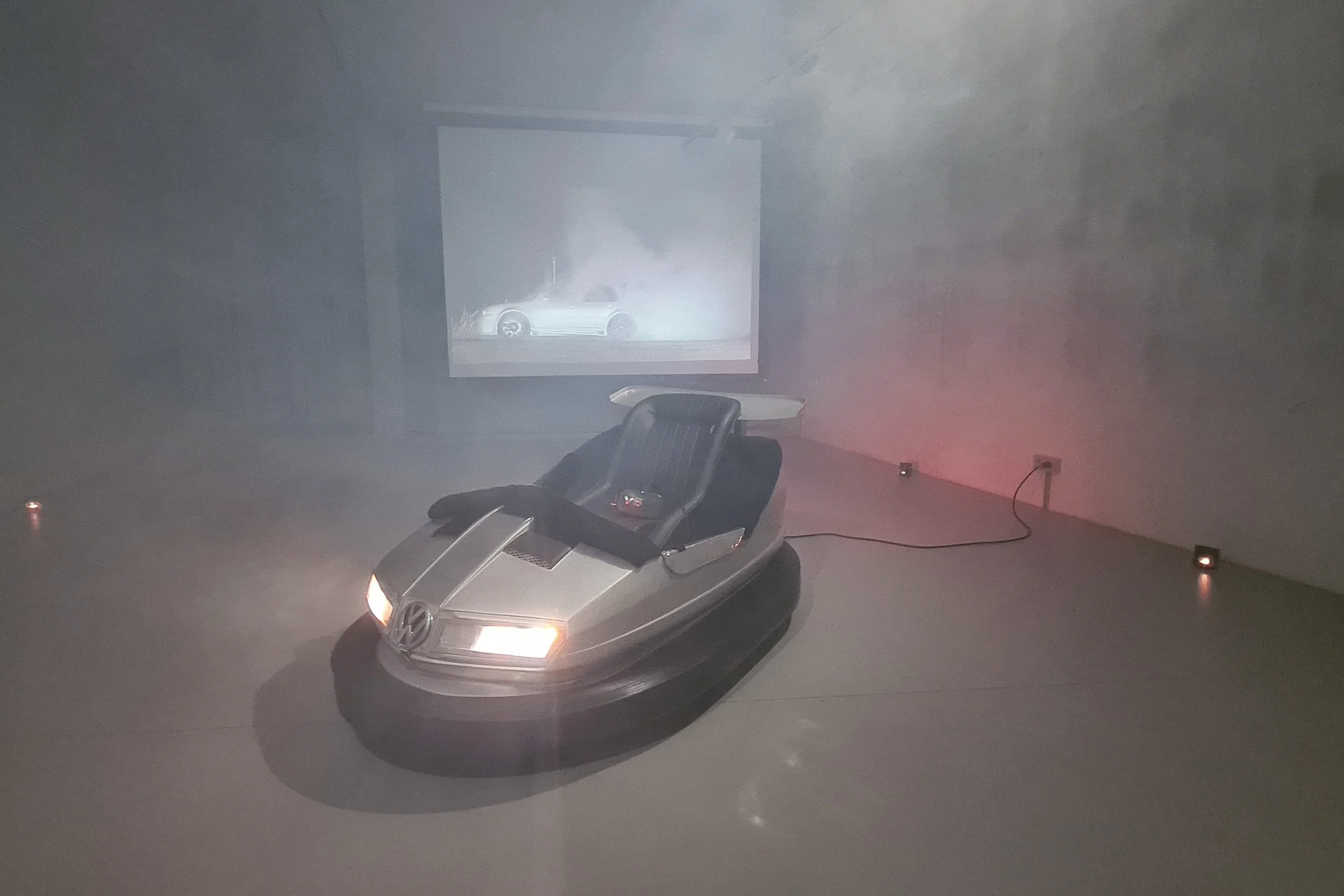
Hysteresis (2022). Modified bumper car, VR experience, digital video. Feld Fünf / ACI Gallery, Berlin Art Week
With the Rojava Center for Democratic Technologies, which I initiated in NE Syria in 2022, I developed MIJ (The Fog), a mobile defense system against Semi Active Laser (SAL) missiles, which combines open source defense technology with myth and folklore. A sculpture has been made, based on a 3000 BCE votive figure for the Sumerian god of thunder and mist, Ninurta. The statue’s eyes detect infrared laser signals emitted by missiles, while a device in its interior can generate fog that is released through its mouth to confuse missile targeting systems. The work’s development phase was supported by a grant from the foundation Error 417 Expectation Failed and featured at the online exhibition 13 Scores Against Tech Fascism. The work has also been on show at Lothringer 13 in Munich as part of Antifascism: Now (exhibition review in Frankfurter Allgemeine Zeitung). A large scale installation, which will be launched in November 2026, has been commissioned by Stedelijk Museum Amsterdam.
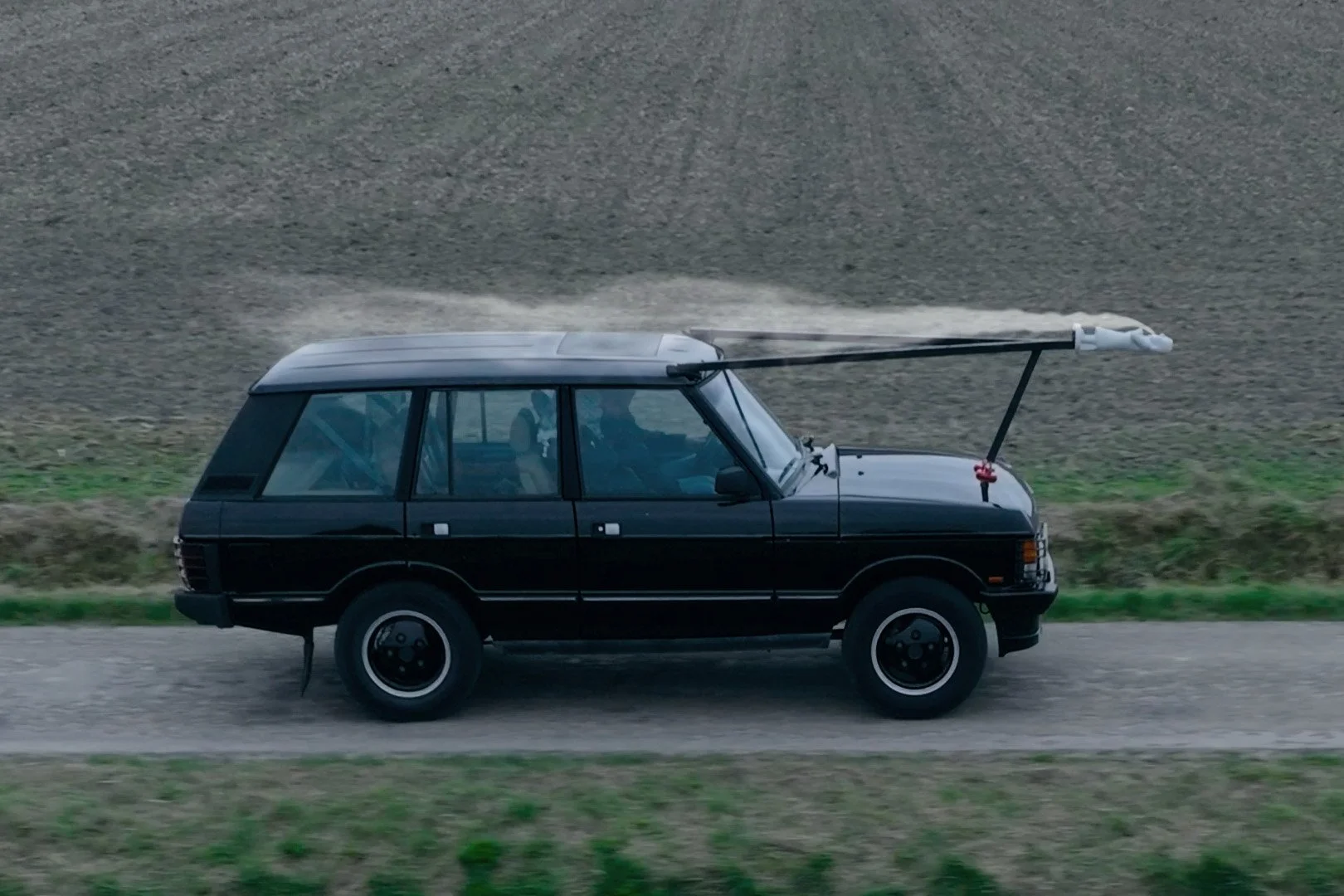
MIJ (The Fog), 2026. Interactive sculpture attached to vehicle (video still). Stedelijk Museum Amsterdam (forthcoming)
Mid 2026, I will shoot a new video work on the Dutch island of Vlieland, commissioned by Into The Great Wide Open festival. In the only area in Western Europe where NATO aircraft drop live ammunition for training purposes, I will blow up a green wooden house that is reminiscent of the Monopoly game, a green screen studio setting and the hut of the so-called Unabomber, who mailed explosives to protagonists of technoculture during the 1980s and 90s.