TECHNO TRASH
I explore the potential of technological waste to disrupt and rework boring and violent techno-ideologies
What happens after electronic devices' functional lifespan in consumer culture has ended? Since the early 2010s, I have explored the afterlife of technologies. After an initial phase of engagement with the performative dimensions of waste processing and repair in various places in Europe and Africa, I have increasingly focused on the potential of ritual, mythical and religious practices in the appropriation of everyday technologies to create a technoculture that is in synch with local lifeworlds.
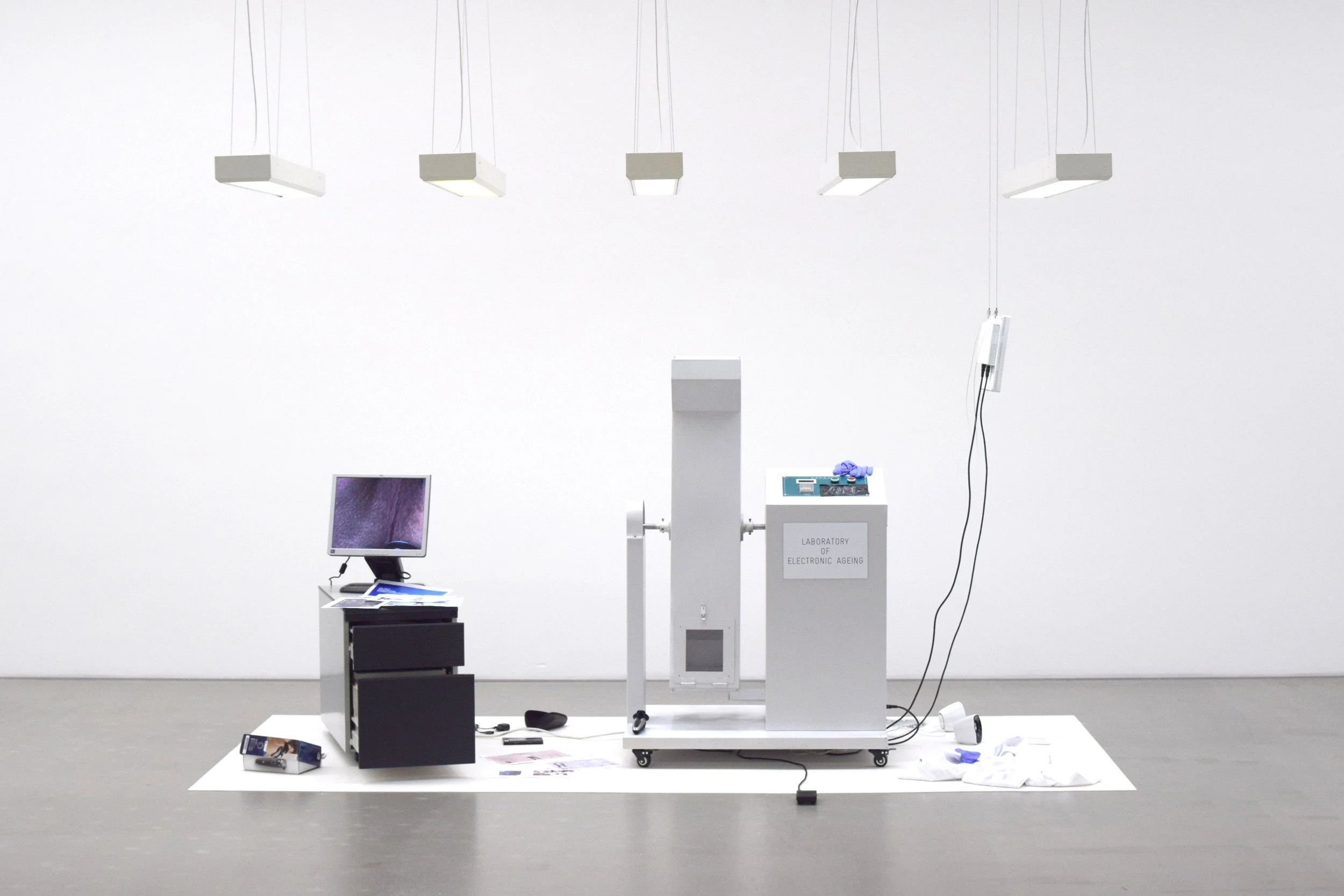
Laboratory of Electronic Ageing, 2019. Installation with crash testing machine for electronics, Philips electric shaver, copies of classified marketing data and digital video. Museum of Contemporary Art Leipzig
Between 2013-2025, I led the artistic research project Disobedient Devices at The Royal Central School of Speech and Drama, University of London, as part of which I visited electronic waste dumping and processing sites in Nigeria, Kenya, Hong Kong and the UK in collaboration with artists and scholars in anthropology, toxicology, design and cultural studies. My project Bodies of Planned Obsolescence (2014-2018), which was funded by research grants from the Arts and Humanities Research Council, engaged with e-waste dumping and recycling. The outcomes, which included performances and collaborative work with Nigerian artisti Jelili Atiku and collaborations with electronics repairers in Nairobi and London were presented at the Victoria & Albert Museum and Somerset House in London, and transmediale festival in Berlin, among others. In addition to artwork, my project led to several publications, including "Abject Digital Performance: Engaging the politics of electronic waste" (Leonardo, 2017), "Making and Breaking: electronic waste recycling as methodology" in Digital Bodies: Creativity and Technology in the Arts and Humanities (Palgrave, 2017)
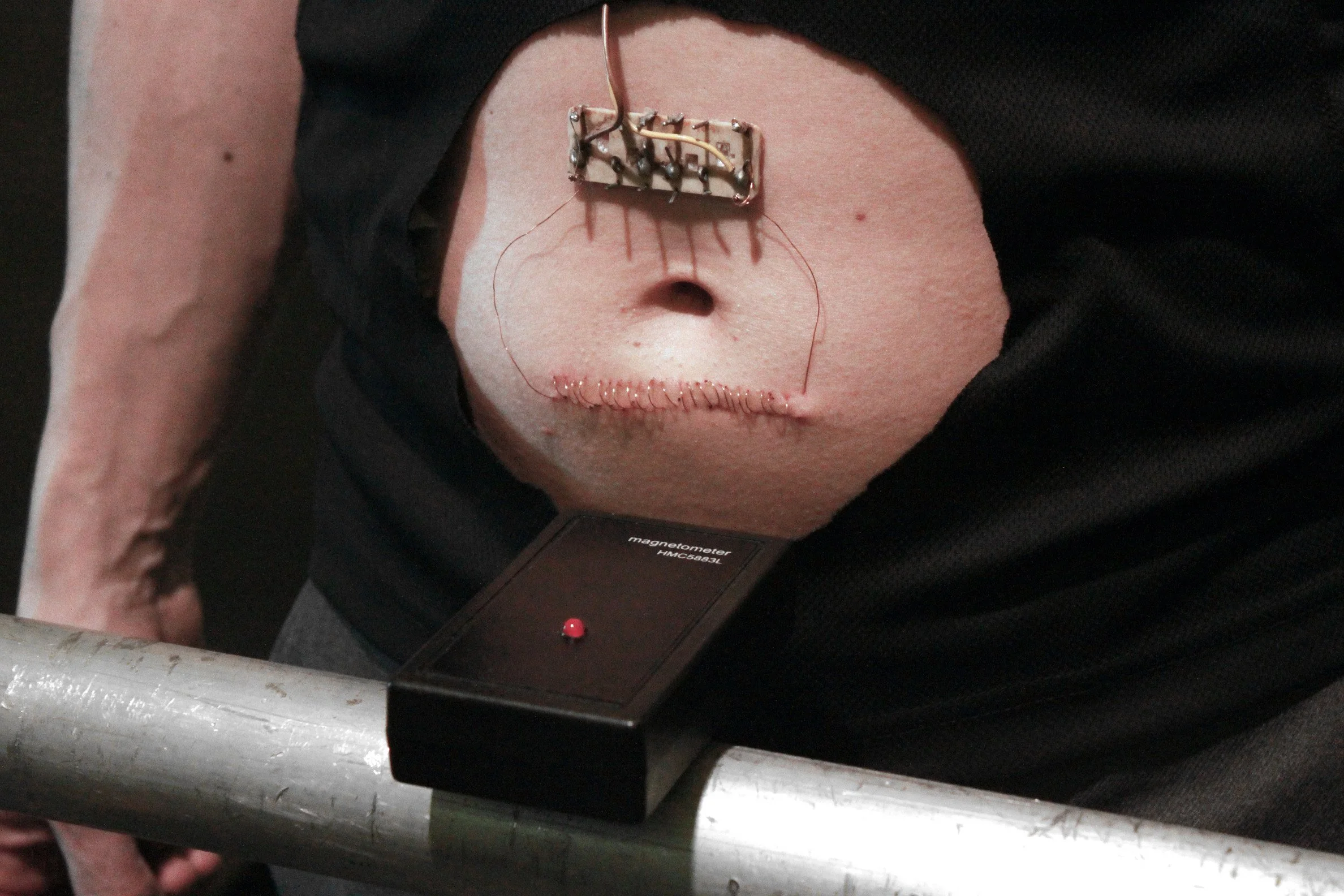
Recycled Coil, 2014. Magnetic coil constructed with copper wire from Nigerian e-waste dumpsite, installed on abdomen by bodypiercer Dirk Hückler. Transmediale Festival Berlin
Since 2019, I have engaged primarily with aspects of myth and ritual in postcolonial technoculture. Together with Nairobi-based artists Joan Otieno and Greenman Muleh Mbillo, I developed workshops, performances, exhibitions and sci-fi short films that explore the ways in which obsolete devices may be reappropriated in relation to imaginaries beyond commonplace consumer culture narratives of progress and efficiency. We organized the exhibition Disobedient Devices at the Nairobi National Museum in 2021. Together with Greenman I made the app Uiiti (2022), a digital successor to the Nzevu - a ritual instrument of the Akamba, Greenman’s tribe - as part of a commission for the House of Electronic Arts Basel. Based on this work, we developed the day-long performance work From the Tree, commissioned by Ensemble Tzara for the Sonic Matter Festival in Zürich. My film The Cults (2021) brings together multiple aspects of the project's process (see also Sci-Fi Apocalypses).
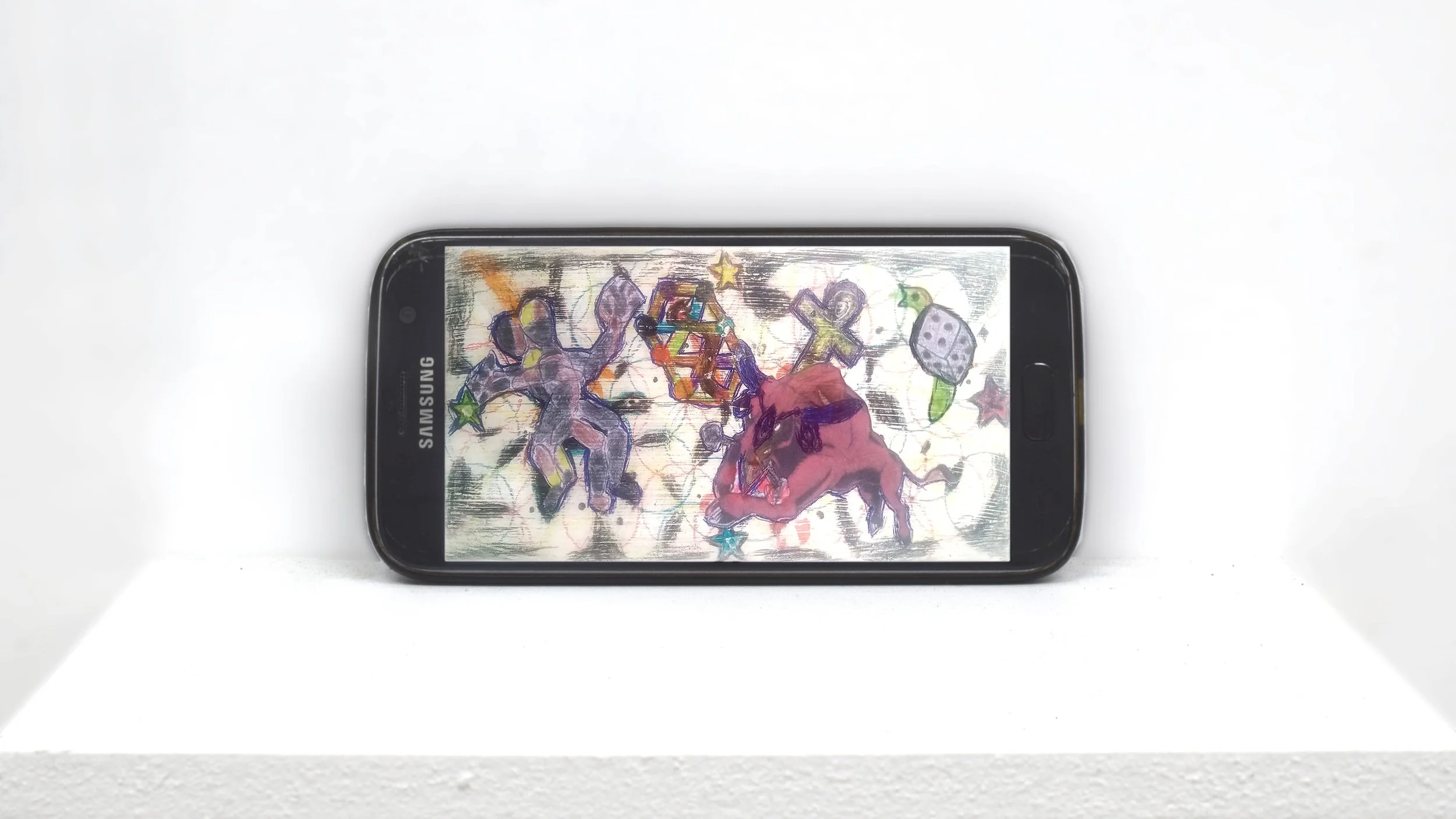
Uiiti, 2022. Android app developed with Greenman Muleh Mbillo. Commissioned by House of Electronic Arts Basel
Alongside, I was a research fellow at the University of Leiden from 2020-2022, as part of the consortium Making Mattters, supported by the Dutch Research Council. As part of my project on techological destruction, I infiltrated at Philips electronics as a sales representative at Europe's biggest consumer electronics trade fair, IFA in Berlin, and imported an industrial crash test machine for digital devices from a Chinese factory. These were integrated in my installation Laboratory of Electronic Ageing, which was exhibited at the New Institute Museum in Rotterdam and the Museum of Fine Arts Leipzig. The installation was featured on ARD German national television and two of my texts on destruction and technology are included in the book Making Matters: a Vocabulary for Collective Arts (Valiz, 2022).
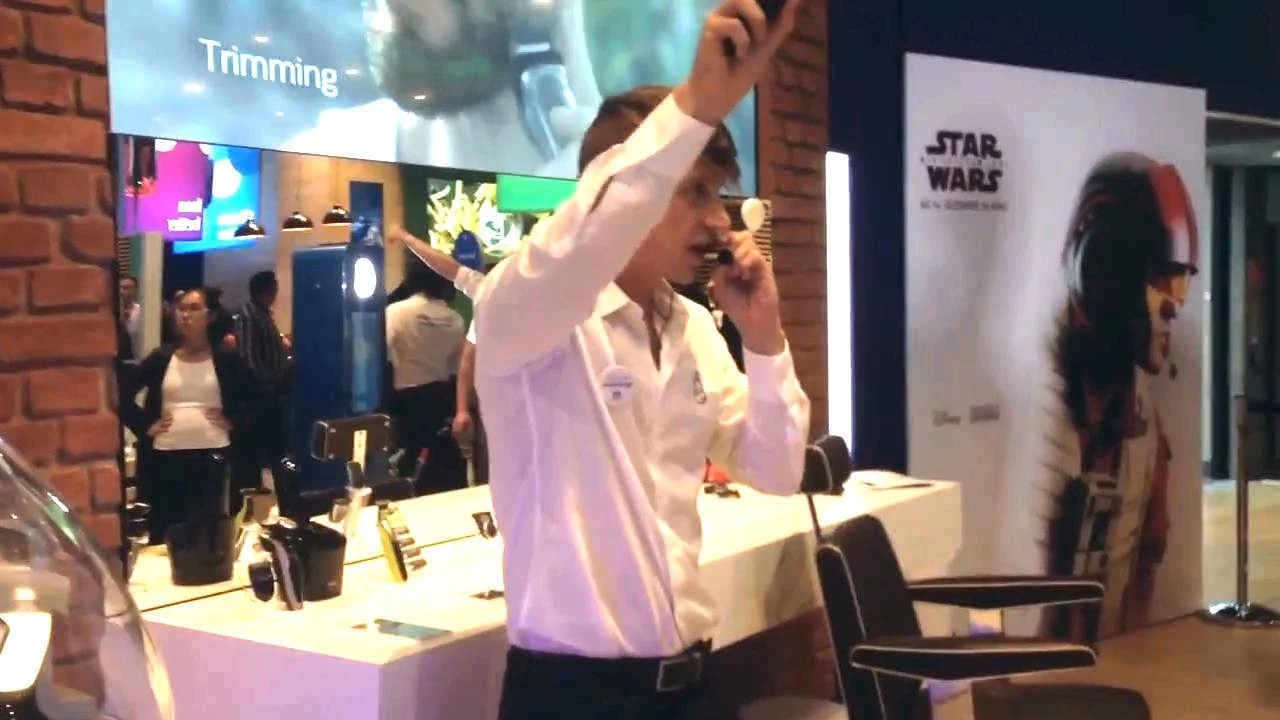
Promoting Philips male grooming technology at IFA Berlin electronics trade fair, 2017. Video still from Laboratory of Electronic Ageing, 2019
In 2025, I made a VR-installation, Hellish Machine (2025), that explores the radical uncertainty of nuclear technology and waste, connected to Erwin Schroedinger and Albert Einsteins correspondence about the "Schroedingers Cat" thought experiment. With support from a grant from the Zeeland Artist Scheme, I traveled to the nuclear power plants of Ignalina (Lithuania), Zwentendorf (Austria) and Borssele (Netherlands) to make immersive video recordings of a 1980s robot cat toy.
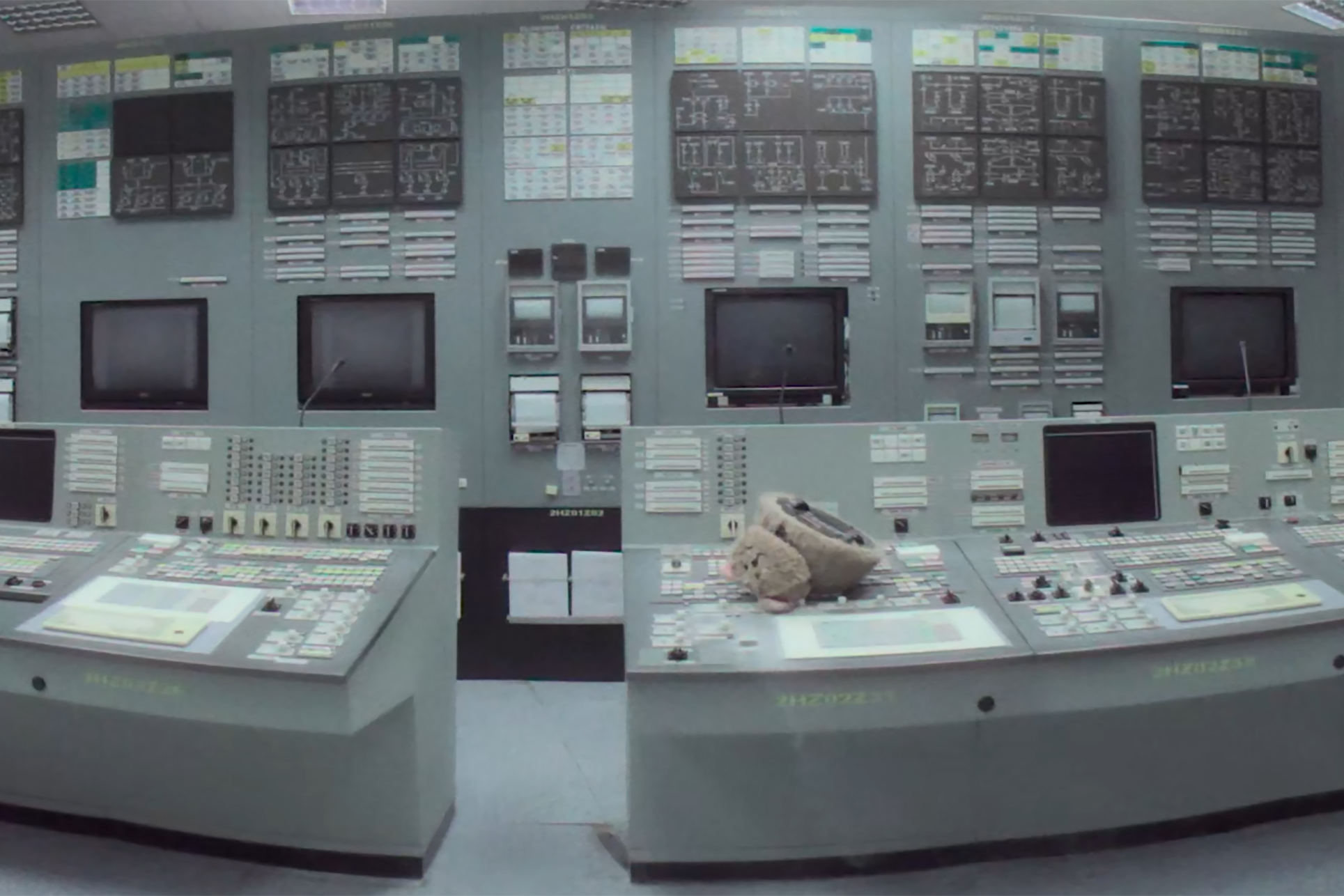
Hellish Machine, 2025. Still from stereoscopic 360 video shot at Ignalina Nuclear Power plant, Lithuania